

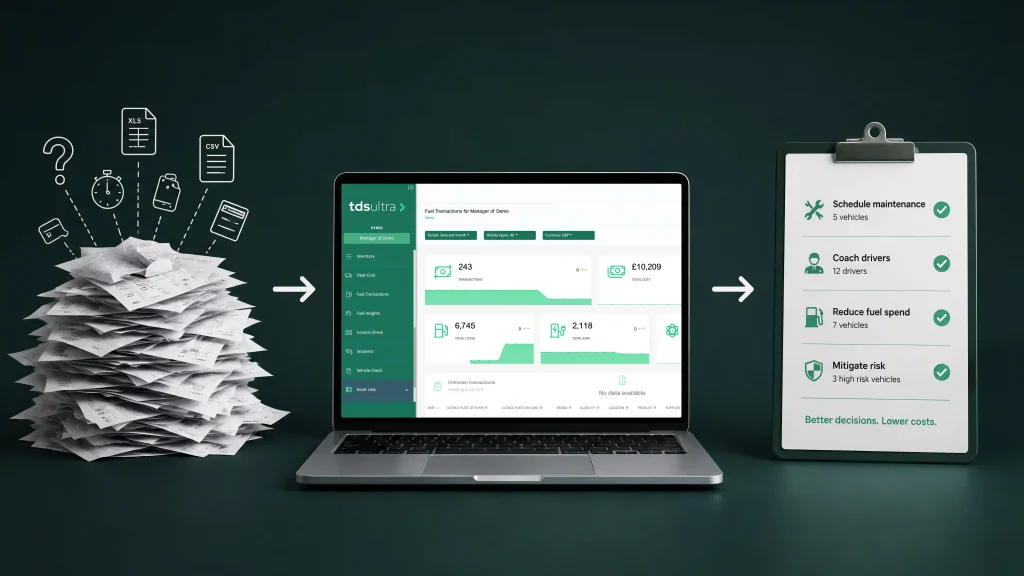
"Integration" gets used loosely in fleet software. Most of the time it means a data feed exists. It rarely means the data means the same thing once it arrives. That difference is the whole job.
Four places data comes from
Any mixed fleet is pulling data from some combination of four sources. OEM native APIs, the highest-quality feed, with no hardware to install. Third-party telematics hardware, for older or non-connected vehicles. Legacy and niche providers already sitting in the fleet from a previous switch. And the cost feeds that live outside any telematics portal entirely: fuel cards, leasing, fines, inventory.
None of those four sources describes an event the same way. That's the integration problem, and it has nothing to do with how many connectors a platform has.
Normalisation is the actual work
Take a single event: harsh braking. One supplier logs it as harsh_brake. Another logs a code, BRK_EVT, with no further context. An OEM API might call it brakeEvent, timestamped differently again. Three suppliers, one event, three formats.
Normalisation maps all three to the same structure, harsh braking, so it means the same thing whichever vehicle, supplier or country it came from. Only once that mapping exists can you compare a van in Leeds against one in Lyon, or trust a fleet-wide risk score that blends five suppliers' worth of history.
A data feed tells you an event happened. Normalisation tells you what it means, and lets you compare it to every other event like it.
Why this matters more as fleets get more complex
A single-supplier fleet can get away with skipping this step; whatever the one portal says is, by default, the fleet's truth. The moment a second supplier, a second country or a second vehicle type is added, that stops being true. Cross-supplier benchmarking, honest TCO, and board-level reporting all depend on the same underlying model, not on any one supplier's dashboard.
That's the part of "integration" worth asking a vendor about directly: not whether they can connect to your suppliers, but what happens to the data once they have.